Website Design & Development
Website and design development is the process of creating, designing, building, and maintaining websites that are accessible through the internet. In today’s digital world, websites serve as the online identity of businesses, organizations, educational institutions, governments, and individuals. A well-developed website not only provides information but also helps users interact with services, purchase products, communicate with organizations, and access digital content.
What is Website Design ?
Website development combines technical programming skills with creative design principles to create functional, attractive, and user-friendly online experiences. It involves multiple disciplines, including web design, user experience (UX), user interface (UI) design, content creation, coding, testing, and maintenance.
The process of website design and development often involves planning and strategy. Before creating a website, developers and designers analyze the goals, target audience, content requirements, and functional needs of the project. Proper planning helps ensure that the final website meets user expectations and achieves business objectives. Strategic planning also improves efficiency and reduces potential problems during development.
Understand Website development
Front End Development
Front-end development focuses on the visible part of a website that users interact with directly. It is responsible for the layout, design, navigation, buttons, images, animations, and overall user experience.
Common technologies include:
HTML (HyperText Markup Language)
CSS (Cascading Style Sheets)
JavaScript
Front-end developers ensure that websites are responsive and work smoothly across different devices such as desktops, tablets, and smartphones.

Back End Development
Back-end development deals with the server-side functionality of a website. It manages databases, servers, application logic, user authentication, and data processing.
Popular back-end technologies include:
PHP
Python
Java
Node.js
Ruby
ASP.NET
Understanding Website Design
Website design refers to the visual appearance and usability of a website. It focuses on how a website looks, feels, and functions from a user’s perspective.

Good website designs aims too
Improve user experience
Increase engagement
Build trust and credibility
Enhance accessibility
Support business objectives
Website design combines creativity with functionality to create meaningful digital experiences
Key elements of website design
Website design and development contribute significantly to brand building. A website reflects the identity, values, and professionalism of an organization. Consistent design elements, clear messaging, and quality content help create a strong brand image. Visitors often form opinions about a business based on the appearance and functionality of its website. Therefore, a professional website can positively influence brand perception and customer trust.
1. Layout: A well-structured layout helps users find information quickly and improves readability.
Common layout sections include:
- Header
- Navigation menu
- Main content area
- Sidebar
- Footer

2. Color Scheme: Colors play a vital role in website design. They influence emotions, brand perception, and user behavior.
Effective color schemes should:
Match brand identity
Provide sufficient contrast
Improve readability
Create visual harmony
For example:
Blue represents trust and professionalism.
Green symbolizes growth and sustainability.
Red conveys energy and urgency.
3. Typography: Typography involves selecting fonts, sizes, spacing, and text styles.
Good typography:
Enhances readability
Creates visual hierarchy
Strengthens branding
Improves user experience
Popular web fonts include Arial, Roboto, Open Sans, and Poppins

4. Images and Graphics: Visual elements help communicate information effectively and increase user engagement.
Common visual assets include:
Photographs
Icons
Illustrations
Infographics
Videos
High-quality visuals contribute significantly to the overall appeal of a website.
5. Navigation: Navigation allows users to move easily between pages.
Effective navigation should be:
Simple
Consistent
Intuitive
Easy to locate
Poor navigation often leads to user frustration and higher bounce rates.
How Karishma Marketing Maintain our Website
Website maintenance is a continuous part of the development process. After a website is launched, it requires regular updates, improvements, and monitoring to ensure optimal performance. Maintenance activities may include updating content, fixing technical issues, improving security, and adding new features.
Website design and development also support digital marketing efforts. A professionally designed website serves as the foundation for online marketing strategies. It provides a platform where businesses can share information, attract visitors, generate leads, and engage with customers. Search Engine Optimization (SEO), content marketing, social media marketing, and online advertising all benefit from a well-developed website. Without an effective website, digital marketing efforts may not achieve their full potential.
Website Development Process
Planning
: The planning phase involves defining project goals, target audience, features, and technical requirements.
Activities include:
- Requirement gathering
- Market research
- Competitor analysis
- Site mapping
- Content planning
Proper planning reduces future development challenges
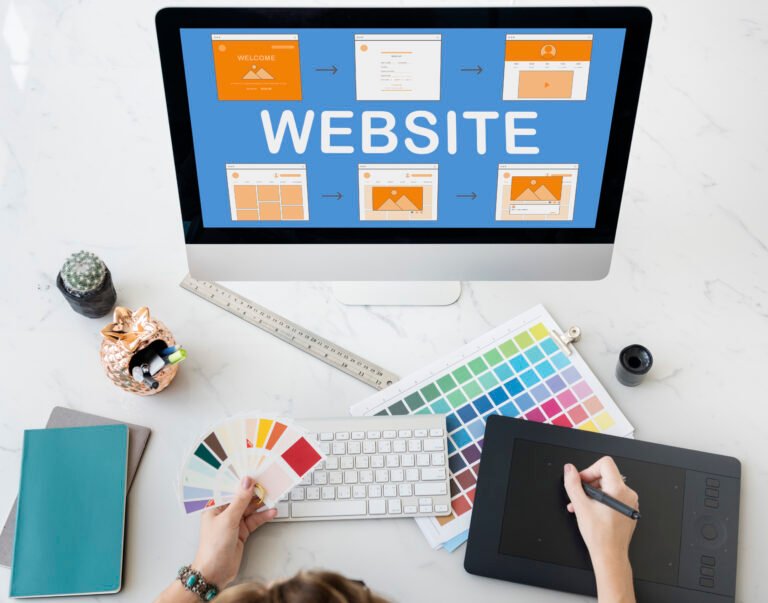
Wireframing
A wireframe is a basic visual blueprint of a website.
It outlines:
Page structure
Navigation flow
Content placement
Functional elements
Wireframes help stakeholders visualize the website before development begins.
Designing
During the design stage, designers create visual mockups showing how the final website will look.
Design considerations include:
Colors
Fonts
Images
User interface elements
Branding consistency
Modern design tools include:
Figma
Adobe XD
Sketch
Development
Developers convert designs into functional websites using programming languages and frameworks.
Tasks include:
Front-end coding
Back-end integration
Database development
Content management setup
This stage transforms design concepts into working digital products.
Testing
Types of testing include:
Functional testing
Usability testing
Performance testing
Security testing
Compatibility testing
Deployment
Deployment involves publishing the website on a live server where users can access it. Key steps include:
Domain configuration
Hosting setup
Server deployment
Final verification
Once deployed, the website becomes publicly available
Maintance
Website development does not end after launch.
Ongoing maintenance includes:
- Security updates
- Bug fixes
- Content updates
- Performance optimization
- Backup management
Regular maintenance ensures long-term reliability.
Lorem ipsum dolor sit amet, consectetur adipiscing elit. Ut elit tellus, luctus nec ullamcorper mattis, pulvinar dapibus leo.
Conclusion
Website design and development are fundamental components of the digital world. They involve creating visually appealing, functional, secure, and user-friendly websites that serve various purposes. Website design focuses on appearance and user experience, while website development ensures technical functionality and performance. Together, they help organizations establish a strong online presence, communicate effectively with audiences, support digital marketing efforts, and achieve business objectives. As technology continues to evolve, website design and development will remain essential for digital success and long-term growth. Website speed and performance are also important factors in website development. Website developers focus on optimizing performance by improving loading speed, reducing unnecessary elements, and ensuring efficient functionality. Better performance contributes to higher user satisfaction and improved search engine rankings.
.
Why Hire us :
Karishma Marketing create professional, modern, and user-friendly websites that represent your brand effectively.
Our websites are designed to provide a seamless experience across all devices, including mobile, tablet, and desktop.
We focus on both attractive design and strong functionality to help your business grow online.
Our team develops fast-loading websites that improve user experience and engagement.
We build websites with SEO-friendly structures to help improve your search engine visibility.
Every website is customized to match your business goals, industry, and target audience.
We ensure secure, reliable, and scalable website solutions for long-term success